I take it this is pretty common. Someone reads “The Design of Everyday Things”, has an epiphany, and then goes off to become a better designer, developer, product manager or overall person.
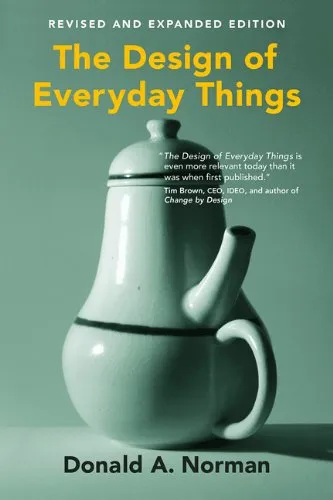
Why is it such a good book?
First of all, Don Norman knows his stuff. This does not read like one of those books written by people that know everything about everything. This reads like Norman’s life’s work. He has spent a lot of time thinking about good design, what great usability looks and feels like. Most importantly, he has spent a lot of time thinking about how to explain it to others so they could understand it too.
He lays it out in simple, understandable terms. He defines reference models to explain interactions between people and objects or digital products and gives practical examples of their usage. He shares his experiments, real world use cases and how he reached his conclusions. You go away thinking that you empirically knew bits and pieces of it all, yet to see it written there may still feel counterintuitive at times. If you’ve read Thinking Fast and Slow, you know how that feels.
What will I get out of it?
The concepts of User-centered design and the bonus fact that your design vocabulary will grow richer: The structure of tasks, making things visible, providing clear mappings, placing constraints on your product that just make them easier to use, accommodating erroneous behavior and all types of human slips as part of your product, understanding your design’s affordances and how you can use of signifiers to make them clear.
You may start seeing every interaction through the lens of the Seven stages of action. From forming the goal to evaluating its outcomes, you realize you go through these stages many times a day, every day. They may not be deliberate, they may not always be conscious, but you do — System 1 or System 2, fast or slow. You can design your product to give your users a hand through these stages.
No mistakes, just bad design. Don Norman will make you feel good about yourself. He’ll tell you that all of those times you made dumb mistakes, well, they weren’t really your fault and they weren’t dumb at all. That text message you sent to your boss instead of your best mate, that time you paid with a £50 at a self-checkout machine and left the change there, that other time you deleted all of your holiday photos and your girlfriend didn’t talk to you for days…. or even when you slammed your face into that glass wall at the office. Those minor errors or slips, they’re human nature. Good design knows this.
You’ll also get a good look at the double diamond model and revisit the concepts of design thinking in light of all you’ve just read. For non-designers or former engineers, it’s easy to fall down the rabbit hole of the solution space without properly understanding the problem. The double diamond model begins by Finding the Right Problem, something every good Product Manager should be doing when given a new problem to solve.
Finally, if you’re into door knobs or faucets, there’s a lot in there for you to think about.
 No need for PUSH signs
Why did it change the way I think about product?
The book gave me (a former engineer and recovering solutionist) a language to think about product design. It gave me a framework to think about experiments that have failed and the many things that I’ve gotten wrong over time.
It reminded me that good products are not just reliable, they’re forgiving, they’re relatable, they remember that people can make mistakes and are willing to help you get out of trouble.
They’re born out of compassion and empathy. They’re human.