How much can you spend on shipping, neglecting the unnecessary, quote nice-to-have, moments of delight, before the scale tips over?
When we’re creating something new, we’re unleashing our model of reality. We do that in an attempt to solve a problem our models have detected and in our belief that perception is shared by others. On top of it all, our solution will be able to extract value from addressing the problem.
These same models of reality of course apply to software products. Our creations are cheap, tremendously easy to modify, and arguably a lot harder to destroy than any of the human constructions that came before us due to their decentralised and intangible nature. For us, technologists, there is a model of what software is, what it should look like, and what can be done with it. We work hard to bridge the margins between what we think it is we’re solving and how others will interpret its benefits.
The industry quorum dictates that the way to bridge this perception gap is to fail fast. To iterate on ideas so rapidly that we’ll fail early and fail often and thus force our dumb brains to adapt their perception. But where does beauty come into this scenario? How does polish fit? How do we learn to care about the little details that can make people fall in love with your product’s personality? When we’re just focused on learning what the next big thing is, how will we ship the joy of using our products?
Imagine that when creating something new, we’re mining bits of a precious new metal. Any time we begin to extract them, we have to decide whether we’ll deposit them on the side of delivery or on the side of delight.
To create world-class products, we need to keep a tight balance.
The bias towards action — #alwaysbeshipping
Existing entrepreneurship mottos have taught us we should always be shipping. Hashtags were born, great books were written, we became addicted to MVPs, cue rapid prototyping. We want to put something out there that will fail fast. ‘Failure is learning’ we keep repeating, while arguing about what’s minimum and what’s viable. Does our model of these two concepts match that of our (idealized) customers? ‘I don’t know, let’s deliver an MVP and find out.’
There are lots of powerful ideas behind these concepts. Firstly, there’s a humility that I can relate to:
We recognize there’s a lot we don’t know and we’ll only really begin to grasp once we show it to others. Maybe no one will care about this thing, so let’s build the cheapest version we can, to make sure.
Also, no one gets it exactly right at first try. Even when we are onto something, there’s so much wrong with it, that only by getting our hands dirty will we find out what that is. Experimentation might just be the real mother of invention.
Reid Hoffman, who created this little company called LinkedIn, said that if you’re not terribly embarrassed by the first version of your product, you’ve shipped too late. So we’ll measure, we’ll learn, iterate and if we’re wrong, we’ll do the famous pivot.
But in our delivery rush, we build up a debt to delight.
*Not bad, but we only deal in excellence — #pixelperfect * There’s another group with stakes in this game. Those who think of themselves (sometimes rightly so) as artists, artisans and crafters, who put so much thought into their creations they suffer from separation anxiety when they have to let it out and into the world.
Every last minute, they decide they aren’t quite there. No way people will enjoy it as is. Let’s just put the finishing touches on it. We want delight! We’ll only stop when we’re sure customers will love it. We obsess about the little big details, the emotion and the micro-interaction, the hyper polished version of ourselves and our solutions. Our product should be inspirational and aspirational. It should show we care and nothing less than perfection is enough.
We’re proud to say: It’s pixel perfect.
What if we were wrong? What if all our precious metal was invested in polishing the wrong solution, or one to a non-existent problem? What if we’re not Steve Jobs? And even if we are set to become our idols, was the first iPhone perfect? At some point, we’ll have to pay the debt to the delivery and learn from our mistakes.
*Balancing the scale * As you might’ve guessed from the title, this post is about the balance. It’s about chipping away at your unfinished product, while being aware that it’s all too easy to lean too much one way. With every iteration, be that an feature, an experiment, a refactor, a redesign, an interstitial animation or a beautiful illustration, ask yourself: What’s my current balance?
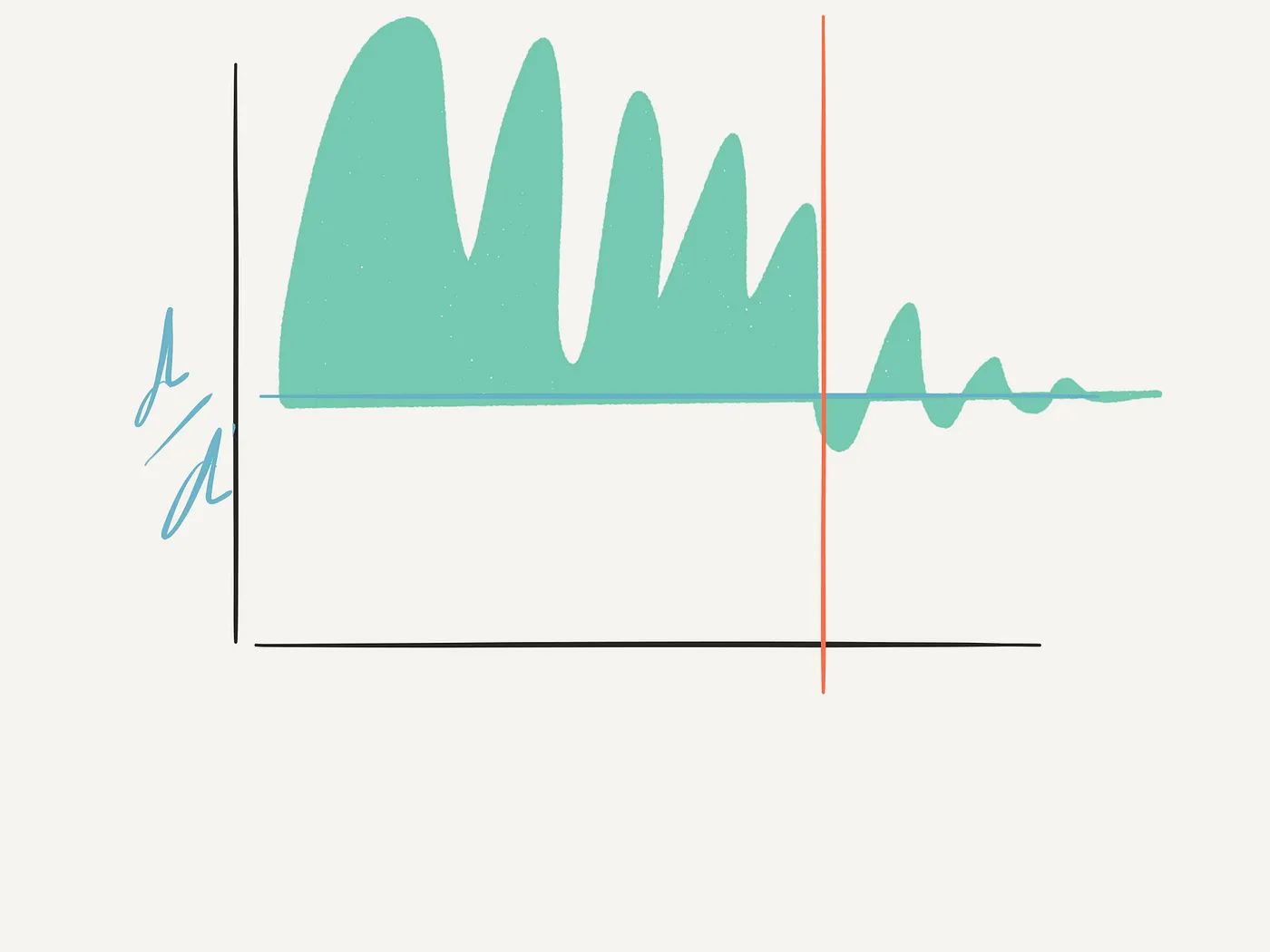
You should strive to keep your balance when creating something. If you’ve strayed too far delivering stuff without sweating the details, you know you’re indebted to delight - just ask yourself, is this product any fun now? Is it actually great?. On the other hand, if you’ve spent weeks crumpling your prototypes into paper balls and throwing them into the figurative product bin because they’re not ready, just ship them — learn what you can’t know and pay your debt to delivery.
This is about keeping score: Balance delivering the jobs your product needs to do, with the small things that will spark the flame of delight in your customers.
The devil is in balancing the scale.